Things to do

In Ghanche, the options for accommodations are as versatile as the country’s landscape. Do you want to camp in the midnight sun, enjoy nature on a holiday farm or relax in a hot tub of a cozy bed & breakfast under the northern lights? From chic boutique hotels and secluded cottages to dazzling downtown apartments and easy-going hostels here you can find suitable accommodation for every taste and budget.

Region

Region-things

Categories

Category

Type of Accomodation

Things to do accomodation

Khanqah-e-Mualla Noorbakshia Khaplu Bala

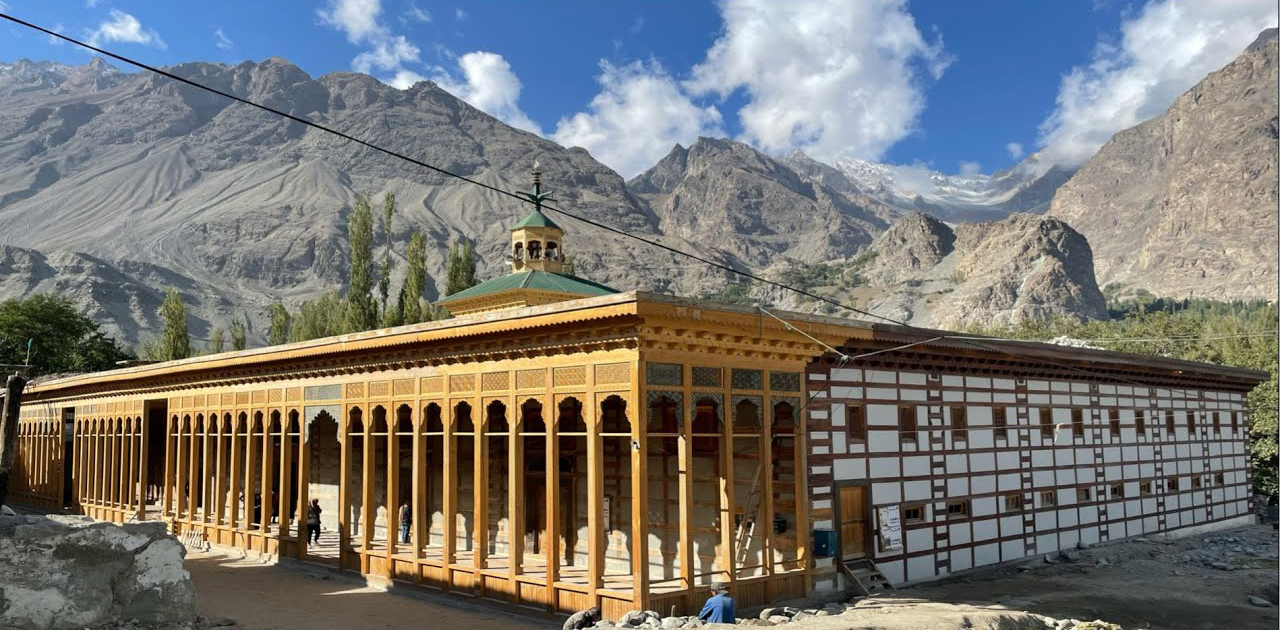
Khanqah-e-Mualla Noorbakshia Khaplu Bala is a significant Sufi spiritual center located in Khaplu Bala, Ghanche District, Gilgit-Baltistan, Pakistan. Established in 1370 CE by Sufi master Mir Mukhtar Akhyar of the Noorbakshi order, it stands as the largest khanqah (spiritual training center) in the region, constructed primarily from mud and wood .YouTube+3Wikipedia+3Wikipedia+3Instagram+4Wikipedia+4Wikipedia+4


🕌 Architectural Significance

  • Construction: Built between 1109 and 1124 AH (1712–1713 CE), the khanqah is renowned for its unique architectural blend of Tibetan, Iranian, and Mughal styles.Wikipedia+2Wikipedia+2Wikipedia+2
  • Capacity: The prayer hall accommodates up to 3,000 worshippers, with additional space in the adjoining grounds, making it one of the largest mosques in Gilgit-Baltistan .Wikipedia
  • Materials: Utilizing local materials, the structure exemplifies traditional construction techniques suited to the region’s climate.

🕋 Spiritual and Cultural Role

  • Purpose: The term “khanqah” combines Persian words “khan” (living area) and “qaah” (spiritual training), signifying its role as a center for spiritual development and community gathering .Wikipedia+1Wikipedia+1
  • Current Leadership: As of 2025, Syed Mubarek Ali serves as the Imam and Khateeb, overseeing religious activities and community affairs.Wikipedia+1Wikipedia+1
  • Renovation Efforts: Ongoing restoration work aims to preserve the khanqah’s historical and architectural integrity, ensuring its continued service to the community.Wikipedia

🌄 Visiting Khaplu Bala

Khaplu Bala, situated approximately 103 km east of Skardu, offers visitors a glimpse into the rich spiritual and cultural heritage of Baltistan. The khanqah, along with other historical sites like the Chaqchan Mosque and Khaplu Palace, makes the region a significant destination for those interested in Islamic history and architecture
Saltoro Valley, located a three-hour drive to the right of Dumsum Valley, is a captivating region known for its scenic villages situated along both sides of the Saltoro River. Goma, the last village in the valley, acts as a gateway to the area’s striking natural landscapes.

The valley is home to several prominent glaciers, peaks, and cones, including the renowned Saltoro Gangri, K-11, and K-12, all towering above 7,000 meters. These majestic formations enhance the region’s rugged beauty, making it a prime destination for mountaineers and outdoor enthusiasts.

Notably, the Siachen Glacier, which lies within the Saltoro Goma Valley, is the world’s highest glacier and a significant military battleground. Its strategic and historical importance further adds to the intrigue of the valley, attracting those with an interest in both natural wonders and military history.

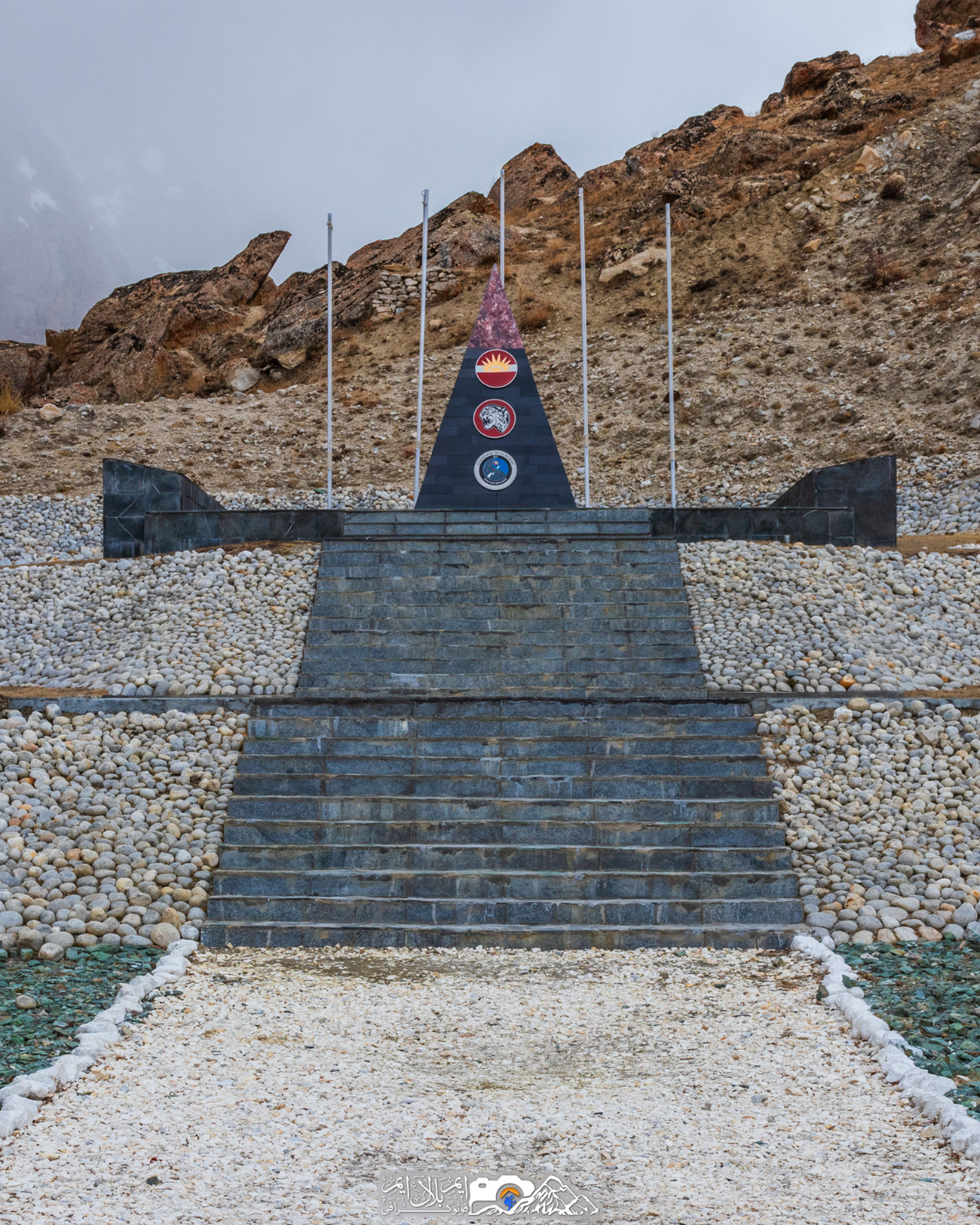
Additionally, the Yadgar Shohada Geyri Sector, located in this area, holds great significance as a tribute to the fallen soldiers. This sector, with its historical and military importance, further enriches the cultural and strategic heritage of Saltoro Valley.

The Siachen Glacier, located in the eastern Karakoram range of the Himalayas, is the world’s highest battlefield and a significant geopolitical flashpoint between India and Pakistan. Stretching approximately 76 km (47 miles), it is the longest glacier in the Karakoram and the second-longest in the world’s non-polar regions. Wikipedia+3Chahal Academy+3Wikipedia+3


🏔️ Geography & Strategic Importance


⚔️ Military Context

  • Conflict: The Siachen Glacier has been a point of contention between India and Pakistan since 1984, when India launched Operation Meghdoot to gain control over the glacier. Indian Defence Review+2Chahal Academy+2Wikipedia+2
  • Actual Ground Position Line (AGPL): This line demarcates the current positions held by Indian and Pakistani forces in the Siachen region, with India controlling the higher elevations and Pakistan the lower areas. Wikipedia

🌐 Environmental and Climatic Conditions

  • Climate: The region experiences extreme weather conditions, with temperatures dropping below −40 °C (−40 °F) and heavy snowfall exceeding 1,000 cm (about 400 inches) annually at higher elevations. Encyclopedia Britannica
  • Glacial Features: The Siachen Glacier is fed by several tributary glaciers and is a crucial source of freshwater, contributing to the Nubra and Shyok rivers. Wikipedia+2Chahal Academy+2Encyclopedia Britannica+2

🏞️ Saltoro Valley

Adjacent to the Siachen Glacier, the Saltoro Valley is situated within the Ghanche District of Gilgit-Baltistan, Pakistan. It is known for its rugged terrain, high-altitude peaks, and proximity to the contested glacier. The valley is part of the larger Baltistan region, often referred to as “Little Tibet” due to its cultural and geographical characteristics

Not far from Keris Khanqah there is a complex of monuments which has several Astanas among them the prominent Astana of Syed Mir Mukhtar. The entire complex of Astana has been largely renovates wood craft of Baltistan. The Astana of Mir Mukhtar is square in plan, with a drum and a large cylindrical tower with finial rest on the roof. The building has intricate wood carvings on the door frames and panels as well as latticework. The 350 to 400 years old Astanas are surrounded by other graves. The tower is unique of its kind in Gilgit-Baltistan. The wooden screens (jails) are very beautiful and delicate and the wood work reflects traditional carpentry skills in the region.

The Complex of Astanas in Keris, located in the Ghanche District of Gilgit-Baltistan, Pakistan, is a significant spiritual and historical site associated with the revered Sufi saint Hazrat Mir Mukhtar Akhyar (RA). This complex serves as a central hub for the Noorbakhshia Sufi order in the region.Visit Gilgit Baltistan


🕌 Overview of the Complex

  • Composition: The complex comprises three main and two minor astanas (shrines), along with a graveyard. These structures are dedicated to Hazrat Mir Mukhtar Akhyar and other notable figures of the Noorbakhshia tradition. doam.gov.pk
  • Architectural Features: The astanas are constructed using traditional Balti woodcraft, showcasing intricate designs and craftsmanship that reflect the region’s rich cultural heritage. doam.gov.pk
  • Khanqah-e-Moallah: Approximately 100 meters from the astana of Hazrat Mir Mukhtar lies the Khanqah-e-Moallah, a spiritual retreat and place of worship for followers of the Noorbakhshia order. YouTube+2Visit Gilgit Baltistan+2arch.bcdf.pk+2

🌟 Significance of Hazrat Mir Mukhtar Akhyar (RA)

  • Historical Background: Hazrat Mir Mukhtar Akhyar (1653–1719) was a prominent Sufi scholar of the Noorbakhshia order in Baltistan. He was instrumental in establishing twelve khanqahs (Sufi lodges) across the region, promoting Islamic teachings and spiritual practices. Wikipedia
  • Literary Contributions: He translated the Arabic text Fiqh-i-Ahwat (also known as Siraj-ul-Islam) into Persian, making Islamic jurisprudence more accessible to the local population. Wikipedia
  • Final Resting Place: His grave is situated within the astana complex in Keris, making it a site of pilgrimage for devotees and scholars alike. Wikipedia

🏞️ Visiting Keris Valley

  • Location: Keris Valley, often referred to as the “gateway to Ghanche,” is located approximately 33 km from Skardu and 70 km from Khaplu. Visit Gilgit Baltistan+1Wikipedia+1
  • Attractions: The valley is renowned for its lush green fields, historic houses, and the confluence of the Indus and Shyok Rivers. Notable sites include the ancient pedestrian bridge known as the “Door to Heaven” and the astanas of Hazrat Mir Mukhtar and Ali Mosavi. Academia+3Visit Gilgit Baltistan+3YouTube+3
  • Cultural Significance: Keris Valley holds a special place in the spiritual landscape of Baltistan, with the astana complex serving as a testament to the enduring legacy of Sufi traditions in the region.

Gulshan-e-Kabir is a village in Ghanche district Baltistan approximately 40 km from Khaplu town.

The history of the region surrounding Gulshan-e-Kabir is both rich and compelling, marked by significant transformations in its identity and cultural landscape. Originally known as Ralta Khonbu, the village was renowned for its lush greenery and fertile fields. However, a devastating flood from the nearby mountains led to the destruction of Ralta Khonbu, leaving the area barren and devoid of vegetation. In response, local villagers began referring to the region as “Phara,” meaning “bald” in the Balti language, in recognition of the devastation. Over time, this name evolved into Pharawa, though it was not a preferred name among the locals. Despite this, both Ralta Khonbu and Pharawa were used interchangeably for some time, with Pharawa eventually becoming the dominant name. It was officially adopted in government records by the Dogra rulers, solidifying its status as the village’s permanent identity.

In 1992, a group of young individuals from Pharawa, residing in Karachi, founded the Anjuman-e-Falah-o-Behbud, a socio-cultural organization aimed at renaming the village. Numerous names were proposed, including the ancient name of Ralta Khonbu. After much deliberation, the group settled on the name Gulshan-e-Ameer-e-Kabir, or simply Gulshan-e-Kabir, in honor of the renowned Islamic saint and missionary, Ameer Kabir Syed Ali Hamadani. This name was chosen to recognize the saint’s pivotal role in converting the local population from Buddhism to Islam. The renaming was met with great enthusiasm and was warmly embraced by the community. Today, the village is known as Gulshan-e-Kabir (The Garden of Ameer Kabir Syed Ali Hamadani A.R.).

Historically, the region was ruled by Raja Ghori Tham, a formidable ruler who governed Baltistan and Ladakh prior to 850 A.D. Under his rule, the Ghori Tham Fort was constructed atop a mountain in Gulshan-e-Kabir. The fort, strategically positioned, played a vital role in defending the region against foreign invasions. Its location, high above the surrounding terrain, allowed for the effective defense of the area, with rocks rolled down the mountain to thwart attackers. The fort’s isolation meant that supplies had to be transported through a secret tunnel from the village below, further enhancing the fort’s strategic importance and security.

Today, Gulshan-e-Kabir stands as a symbol of resilience, spiritual heritage, and historical significance, reflecting the area’s evolution from a lush, thriving village to its current identity as a revered site steeped in history and culture.

Chorbat Valley, located in the Ghanche district, is renowned for its breathtaking natural beauty and rich cultural heritage. This picturesque valley is home to several charming villages and notable tourist attractions. Among its highlights is Hassan Abad Lake, a serene spot ideal for angling enthusiasts.

Chorbat Valley is also a site of historical significance, featuring ancient inscriptions and carvings on large boulders that offer evidence of the region’s Buddhist and Bon influences, predating the arrival of Islam. These historical landmarks provide a unique glimpse into the valley’s spiritual and cultural past.

For those interested in panoramic views, the Frano Border Viewpoint offers a striking vista of the Indian-occupied Thang Valley. Nature lovers can also explore the Dong Dond Waterfall in Chowar Valley, a majestic cascade often featured in National Geographic documentaries. Additionally, visitors can witness traditional craftsmanship at the stone carving factory in Thongmos Valley, where artisans continue the age-old art of stonework.

Chorbat Valley is a true gem for both nature lovers and those interested in history and culture.

Tough hike but a fascinating lake

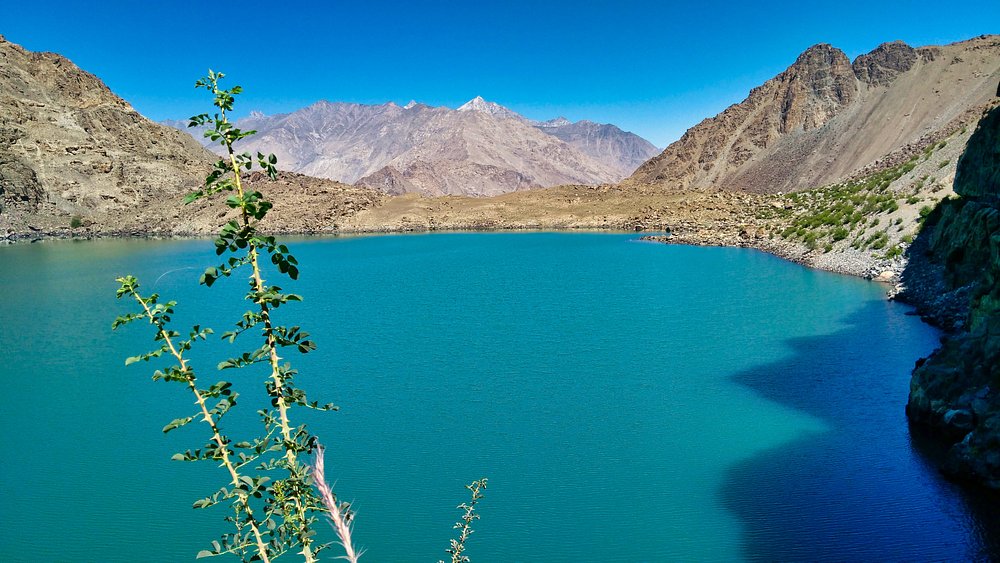
Kharfaq Lake is located at an altitude of approx 13000 ft in the south-east of Kharfaq Village, 22 km short of Khaplu. It’s a fascinating lake that is surrounded by high mountains from all sides. One has to start the climb for the lake from Kharfaq village in the south easterly direction. It is a 2-4 hours steep climb that would require good standard of physical fitness. Not recommended for cardiac patients. The lake is fed by the glacial streams and apparently has no outlet. The water is crystal clear and very slightly brackish, however, brown trout can survive in this water and has been stocked here in good numbers. The hike to the lake is not recommended for those who have physical illness or some cardiac disease etc as it is quite tough.